
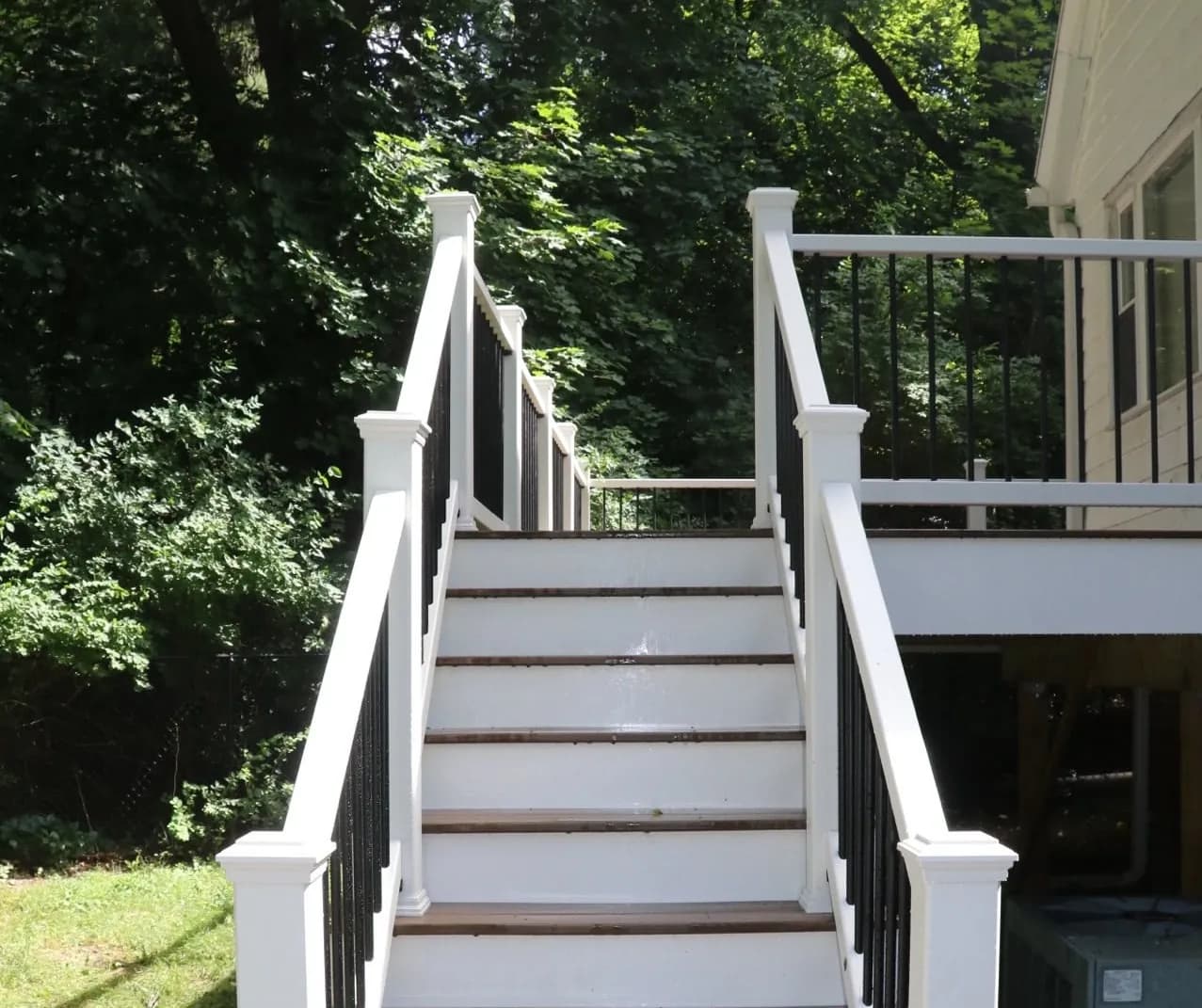
Deck Building in Massachusetts & Connecticut
Composite, PVC, and wood decks built to hold up through a New England winter, not just look good the first summer. Footings set below frost depth, framing sized to actual span and load, and a permit filed before anyone picks up a saw.
A good deck has a way of becoming the best part of your home. It's where dinners run late in the summer and where you end up most evenings once the weather turns warm, so it should also be the last thing you have to worry about. Sustainable Decks builds custom decks across Braintree and the South Shore that are designed around how your family actually uses the yard, and we're proud of the five-star reviews homeowners have left us on Google along the way.
Why this is the part that actually matters
That's the part of a deck build that's easy to cut corners on and hard to catch until it's already a problem, a shallow footing or an undersized joist looks identical to a correct one on the day it's finished. The failures that show up later, heaving, sagging, a ledger pulling away from the house, almost always trace back to a decision made at the framing stage, not a flaw in the decking material on top. That's why the site walk and the framing plan happen before any material gets ordered, not after, and why the permit gets filed under our own license rather than treated as optional paperwork. The visible material, composite, PVC, or wood, is the part everyone asks about first. The framing underneath it is the part that actually determines whether the deck still matters in year eight.
What does the project include?
New construction
Platform, raised, and multi-level decks, built from a single-level platform to a layout with built-in lighting, bench seating, and stairs down to a second level. Joists and beams get sized to the actual span and the load the deck will see, not a generic table, and footings go in below frost depth before framing starts. Composite, PVC, and wood decking all get installed to the same structural standard, the material changes, the framing underneath doesn't get cut short either way.
Deck replacement
A full tear-off and rebuild when the frame underneath the old decking has had it, rot, undersized framing, or a ledger attachment that was never right to begin with. We evaluate the existing footings first and reuse only what still meets current depth requirements, a footing that was adequate decades ago doesn't automatically pass today's standard. New framing goes in sized to the current load, not the original spec.
Repair and resurfacing
Board replacement, fastener repair, and railing fixes where the framing underneath is still structurally sound. Hidden fastener systems, stripped screws, and boards that have cupped or split get addressed board by board, not with a blanket recommendation to tear the whole thing out. We don't sell a full rebuild when a targeted repair actually solves the problem, that call gets made honestly at the site visit.
Framing and railings
Wood, steel, aluminum, or composite framing sized to your deck's actual span and load, with wood, composite, cable, or aluminum railing systems to match. Railing height and baluster spacing follow current code, not whatever was standard when the house was built, which matters most on a replacement where the old railing wouldn't pass inspection today.
Deck styles we build
Every photo below is a real Sustainable Decks job, not a stock example of the style.
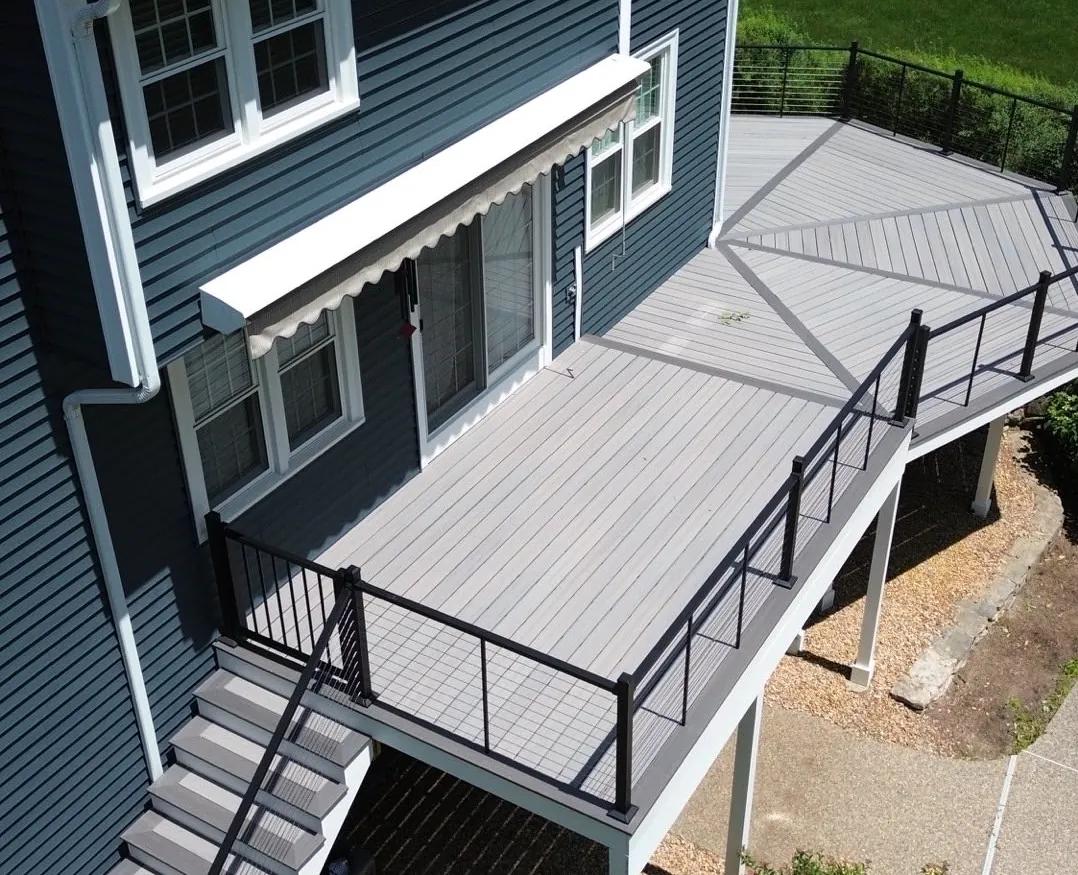
Built flush and low, the most common single-level layout.
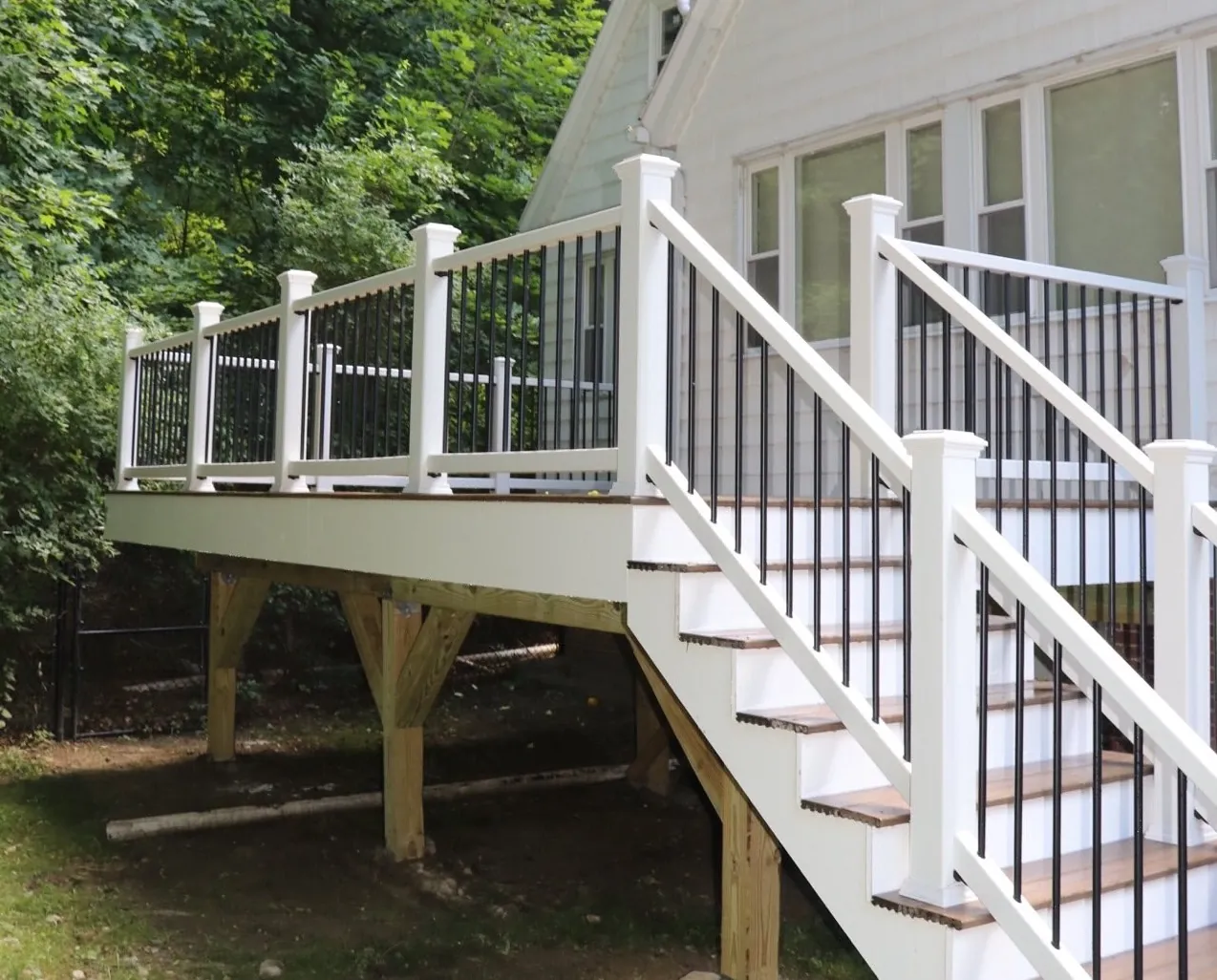
Built up from grade, framed for the usable space underneath.
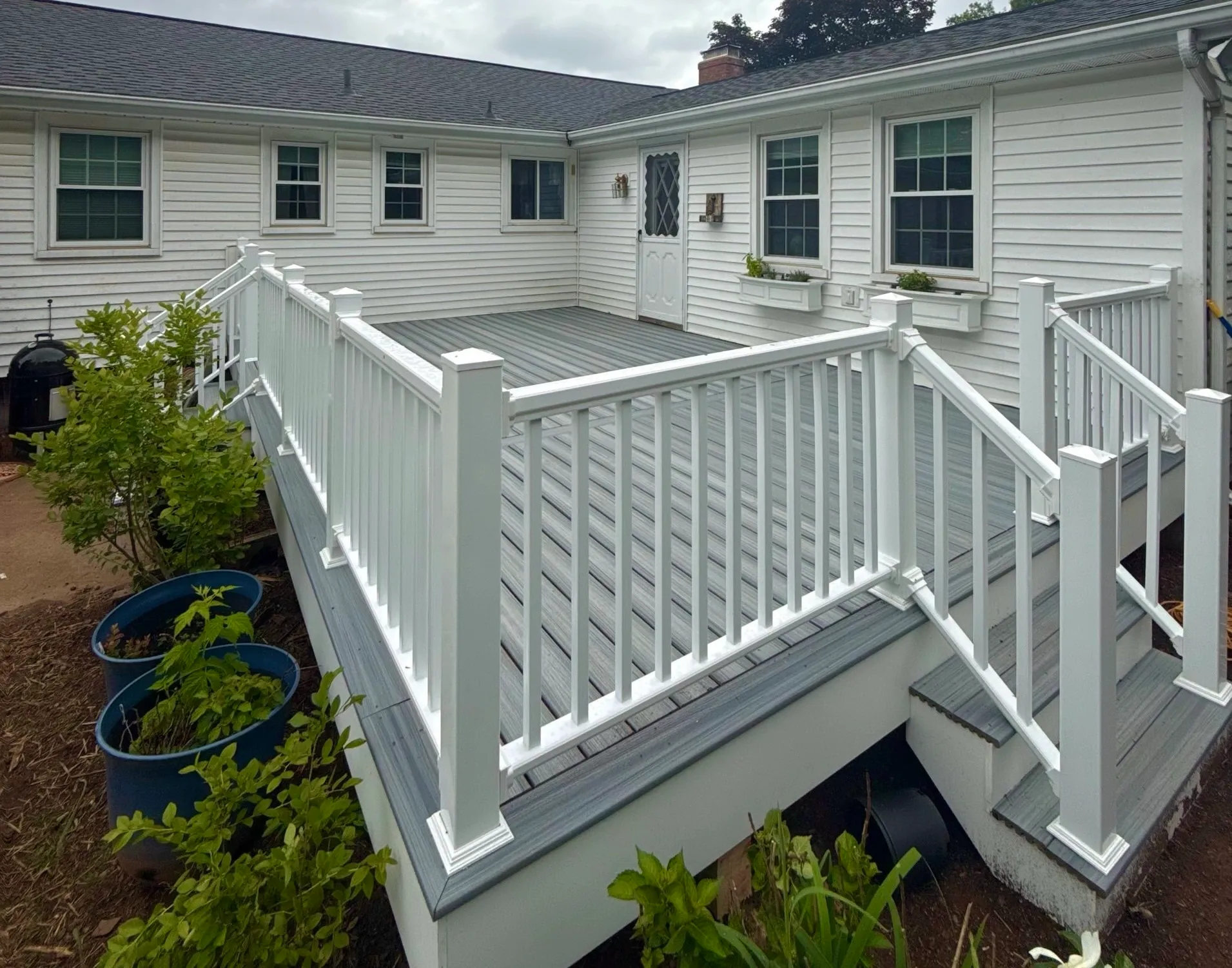
Stepped layouts that follow the yard instead of fighting it.
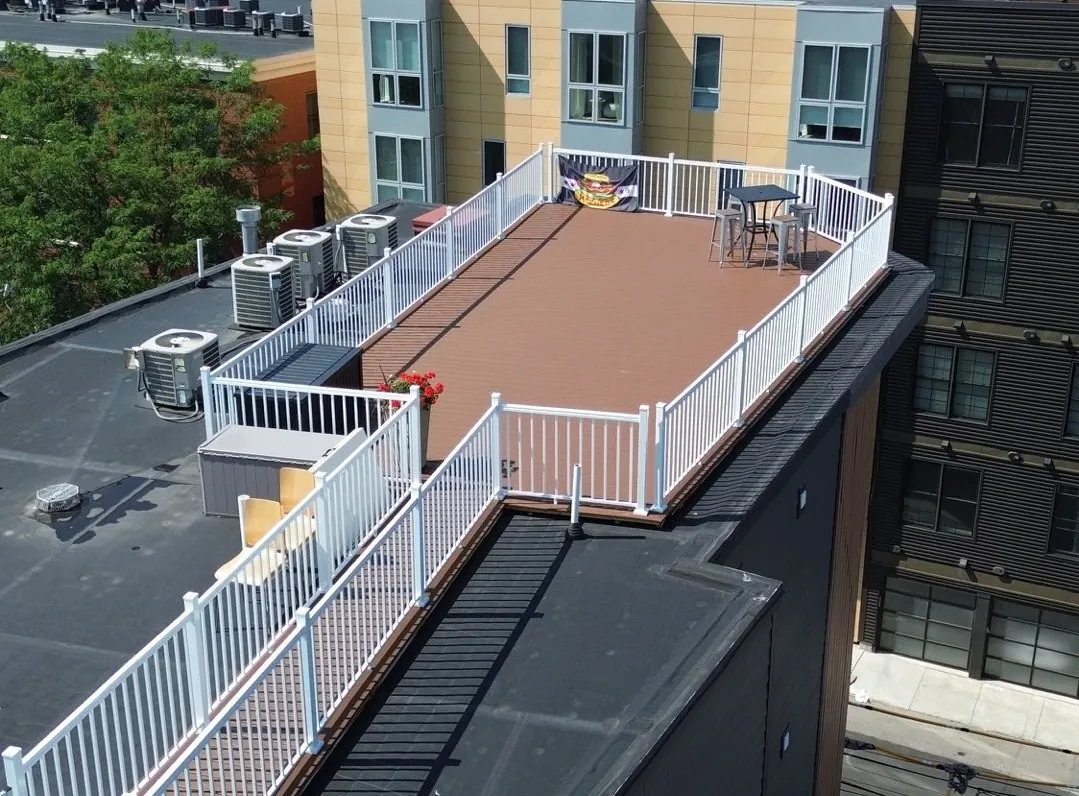
Built over an existing roof section, waterproofed to spec.
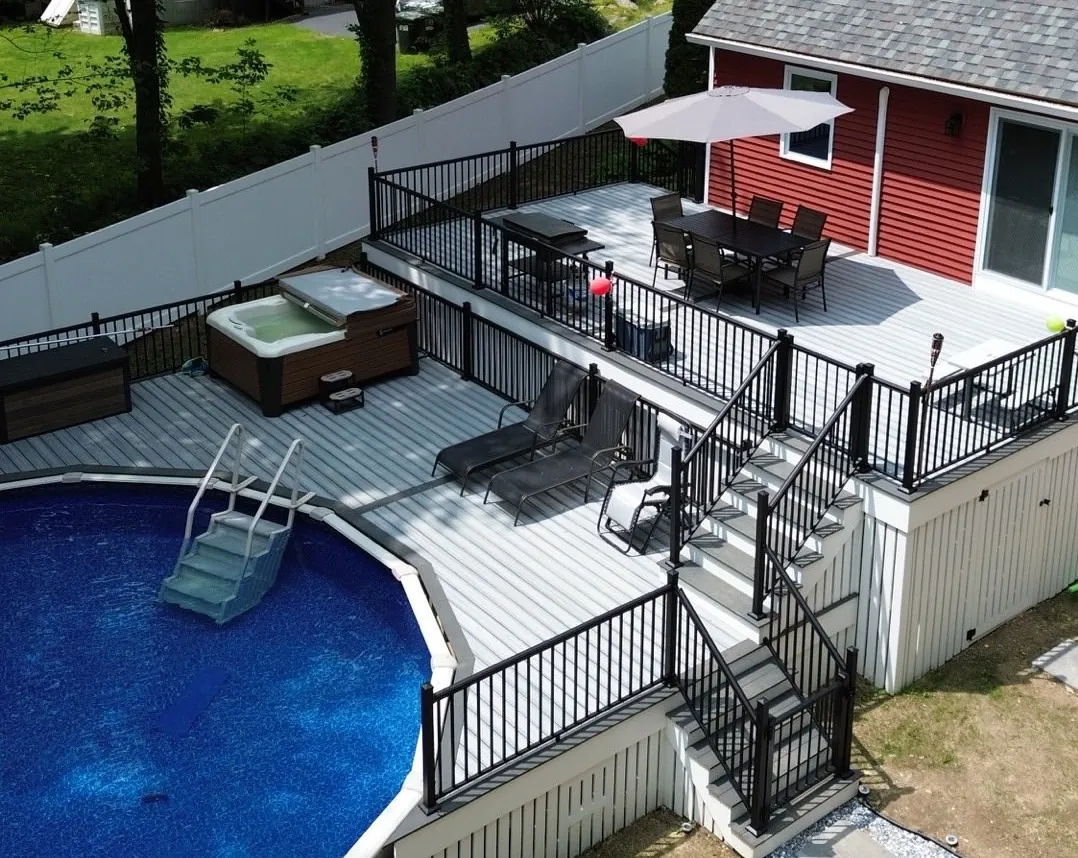
Decking around a pool or hot tub, sloped and drained for wet feet.





What actually matters before you sign a contract?
General Massachusetts and Connecticut construction practice, confirm specifics for your exact address before signing anything.
Footings set below frost depth
Ground frost pushes well below the surface across both Massachusetts and Connecticut, and a footing set above that depth shifts with the seasonal freeze-thaw cycle, which shows up over time as uneven decking and separated ledgers. Massachusetts sets the frost line at 48 inches in 780 CMR 51.00, Table R301.2(1). Connecticut sets it at 42 inches in the 2022 Connecticut State Building Code, amended Table R301.2. Both are minimums, and the building department issuing your permit has the final say. We set footings to the depth your town actually requires, confirmed before we dig, not a generic assumption.
Most decks over 30 inches need a permit
In most Massachusetts and Connecticut towns, a deck built more than 30 inches off grade needs a building permit and a framing inspection, and guardrails become a code requirement at that same height. That threshold, and the exact permitting process, varies by building department and by state. We confirm it for your address before we finalize a quote so the number in your proposal is the number that actually gets filed.
Older homes need a different ledger approach
A lot of housing stock across the South Shore, and in the older river towns we work in across Connecticut, predates modern platform-frame construction. Attaching a ledger board to a balloon-frame wall or a masonry foundation isn't the same job as attaching to newer platform framing, and treating it the same way is how ledger separation and water intrusion happen years later. We identify what's actually behind the wall before we lag a single bolt.
Questions people ask about decks
In most towns we work in, yes, a deck attached to the house or built more than 30 inches off grade needs a permit and inspection. We handle the filing. The requirement gets confirmed against your specific address before we quote the job.
A standard single-level deck usually runs one to two weeks once material arrives, weather and permit timing aside. Multi-level decks run longer. You get a real schedule in the proposal, not a range.
Pressure-treated wood costs less up front and needs restaining every two to three years. Composite costs more at install and after that you're mostly just washing it. Over 15 years the math usually favors composite, we'll run the real numbers for your project.