
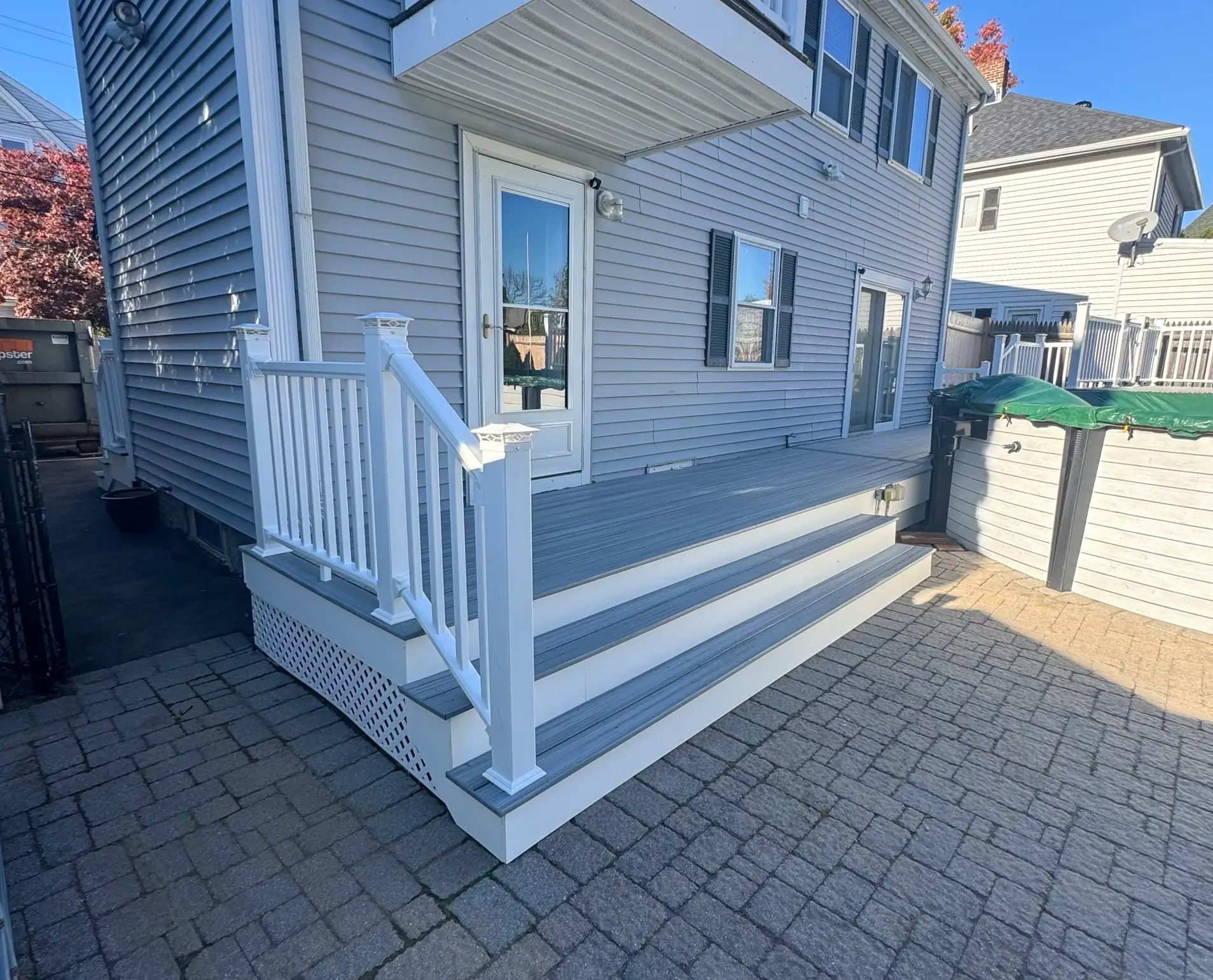
Wood Decking
Pressure-treated wood is still the lowest-cost decking material up front, and the tradeoff for that price is restaining every two to three years to keep it protected.
Wood decking, almost always pressure-treated pine in this region, remains the most affordable decking material to install, which is why it's still a common choice for homeowners prioritizing up-front cost over long-term maintenance.
What wood decking actually means for your project
The tradeoff is real, pressure-treated lumber needs restaining or sealing roughly every two to three years to keep moisture out and prevent graying, cracking, and splintering. Framing underneath a wood deck follows the same span and load principles as any other material, sized to the actual layout rather than a generic assumption. For homeowners who don't mind the upkeep, or who prefer the look and feel of real wood underfoot. It remains a completely legitimate choice. We install it to the same structural standard as composite or PVC.
The case for wood decking
Lowest material cost
Pressure-treated lumber costs meaningfully less per square foot than composite or PVC, which matters most on larger deck footprints where material cost adds up fast.
Real wood look and feel
Some homeowners simply prefer the texture and appearance of real wood underfoot over a synthetic surface, no composite product fully replicates that.
Maintenance is real, not optional
Restaining or sealing every two to three years isn't a suggestion, skip it and the boards gray, crack, and eventually splinter well before the framing underneath would otherwise need attention.
Repairable board by board
A damaged or warped wood board is straightforward and inexpensive to replace individually, without needing to source a discontinued composite color match.
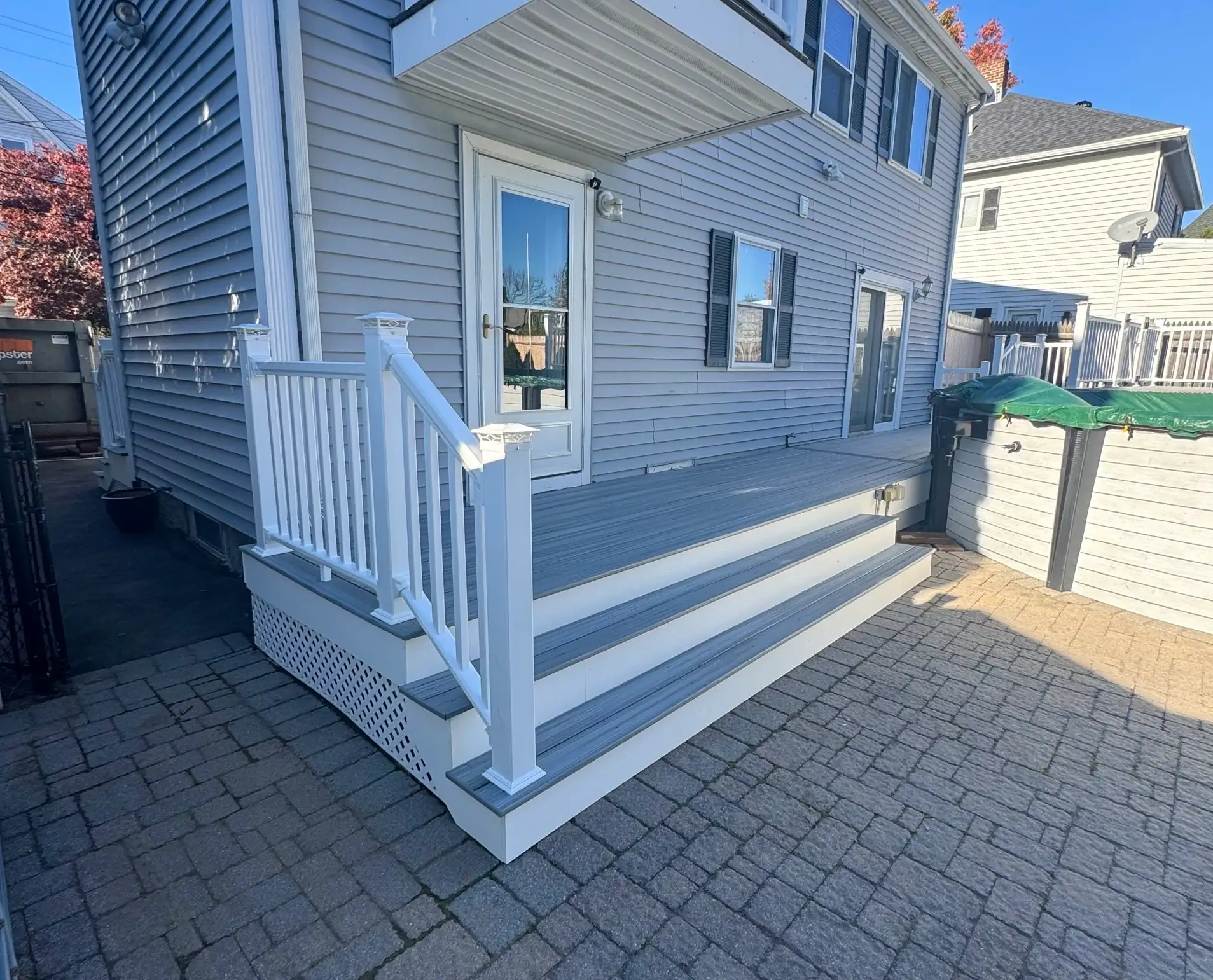
What we check before we quote it
Pressure-treated lumber still needs to acclimate before staining
New pressure-treated decking needs to dry out for several weeks to a few months before it will properly accept stain or sealer, staining too early traps moisture in the board rather than protecting it.
Fastener choice matters more on wood than people expect
Pressure-treated lumber's chemical treatment corrodes standard steel fasteners over time. We use fasteners rated for treated lumber contact, not whatever was in stock, so screws don't fail years before the boards do.
Ground contact rating matters for posts, not just joists
Pressure-treated lumber rated for above-ground use isn't rated for the ground contact posts and footings actually see. Using the wrong treatment rating on a post is a common shortcut that shortens the structure's life well before the visible decking wears out.
Wood decking needs a maintenance commitment the other materials don't
Pressure-treated and cedar decking need restaining or sealing roughly every two to three years to keep protecting the wood. Skip it and the board still functions, but it grays, checks, and wears faster than a maintained one would.
Common questions we get
Roughly every two to three years for a pressure-treated deck, sooner in a yard with heavy sun exposure or standing water on the surface.
Usually not. Wood costs less to install, but the cumulative cost of restaining over 15 years typically closes most of the gap with composite's higher up-front price.
Yes, if the framing underneath is still sound at the time, we can resurface with composite or PVC decking without rebuilding the structure.