
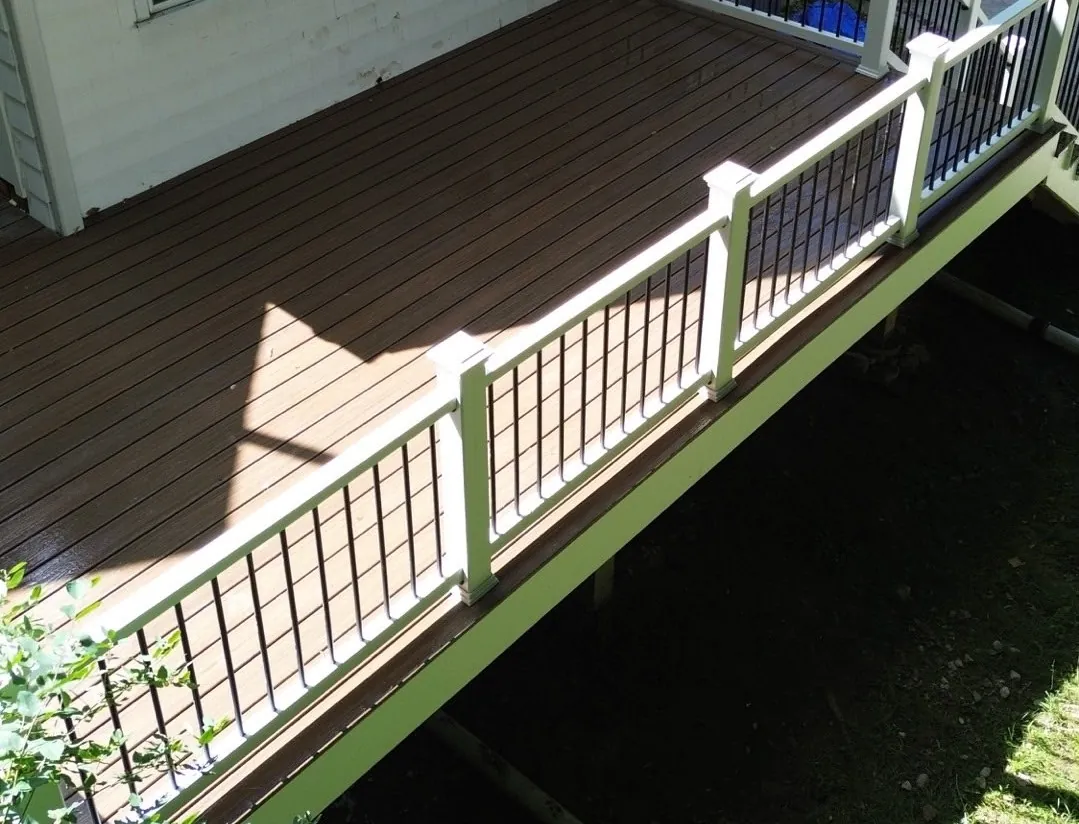
Deck Replacement
A deck replacement is a full tear-off and rebuild, not a resurfacing. We evaluate what's actually salvageable before we start, and reuse only what still meets current depth and load requirements.
Deck replacement comes up when the frame underneath the decking has had it, rot at the ledger, undersized framing from when codes were looser, or footings that were never adequate to begin with.
What does deck replacement actually involve?
We evaluate the existing structure at the site visit, footings, ledger attachment, and framing condition, and tell you honestly what can be reused and what can't. A footing that was fine when a deck was built decades ago doesn't automatically pass today's frost depth standard, and a ledger bolted to an old balloon-frame wall isn't attached the same way a modern platform-framed house is. New framing goes in sized to current load requirements, whether the new decking on top is composite, PVC, or wood.
What you get with deck replacement
Site evaluation
We assess footings, ledger attachment, and framing condition before quoting, not after demo has already started and the surprises are unavoidable.
Honest reuse decisions
Existing footings that still meet current depth requirements get reused, ones that don't get replaced. That call gets made based on what's actually there, not what's easiest to sell.
New framing to current code
Ledger flashing, joist hangers, and railing height all get brought up to current code as part of the rebuild, not left as they were.
One trip, not two
Old decking, railings, and framing all get hauled away as part of the job. You're not left coordinating disposal separately from the build.
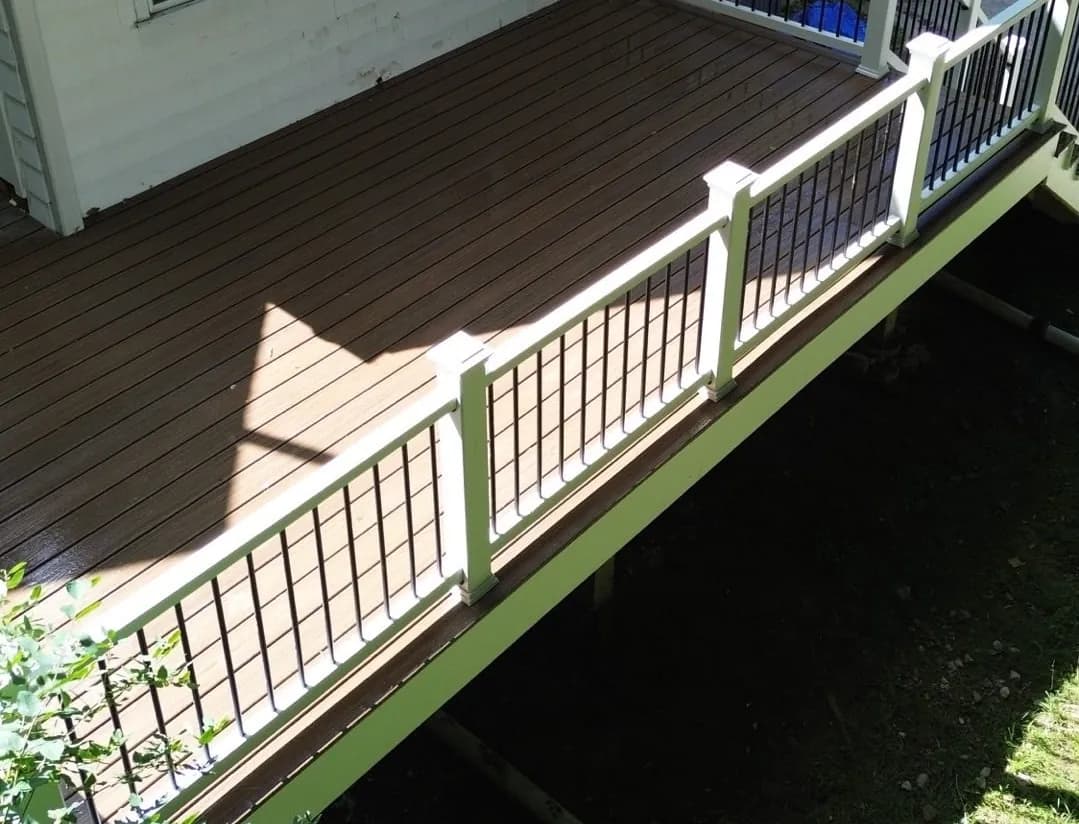
What actually matters before you decide
Ledger attachment is the most common failure point
Water intrusion at the ledger, where the deck attaches to the house, is the single most common reason a deck fails structurally before its decking even looks worn. Proper flashing at this joint matters more than almost anything else in the build.
Old footings don't get a pass
We probe and measure existing footings rather than assume they're adequate because the deck has stood for years. A footing set above the required frost depth can look fine for a decade before frost heave shows up as uneven decking.
Replacement triggers current code, not grandfathered code
A deck built under an older code cycle doesn't keep its old guardrail height or baluster spacing once it's replaced, a full rebuild has to meet the code version in effect today, not the one in effect when the original went up.
The permit is a new permit, not a renewal
Replacing a deck requires the same building permit and inspection process as new construction in most Massachusetts and Connecticut towns, there's no simplified like-for-like pathway that skips inspection.
What people ask us
Sometimes, if they meet current depth requirements and are in sound condition. We evaluate this at the site visit and tell you honestly either way.
Repair fixes specific failed components while the framing stays. Replacement is a full tear-off and rebuild when the frame itself is compromised.
We haul it away as part of the job. Sound lumber sometimes gets set aside for reuse or firewood rather than dumpstered automatically.