
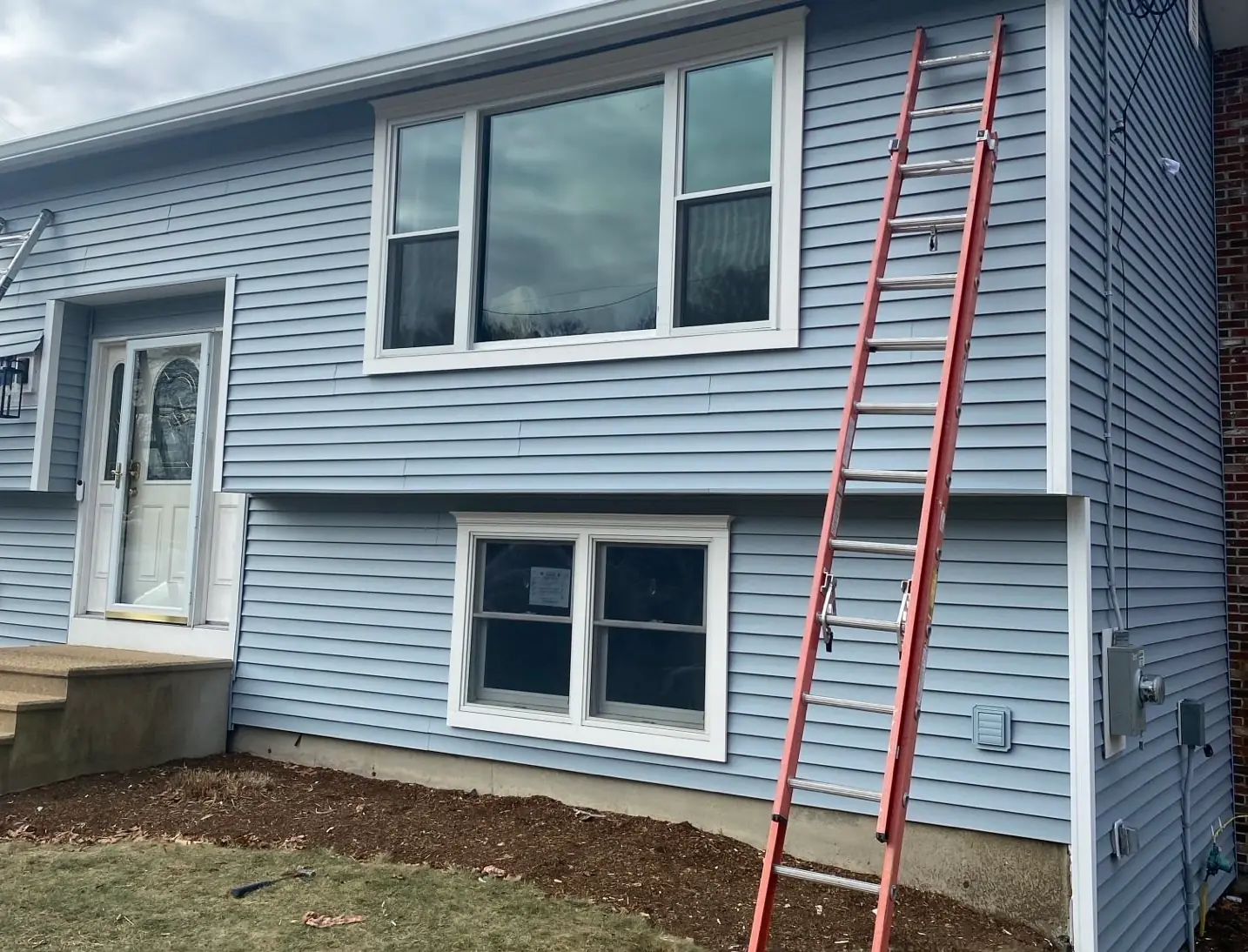
Vinyl Siding
Vinyl remains the most common siding material nationally for a reason, low maintenance, a wide color range, and a lower installed cost than fiber cement or cedar.
Vinyl siding covers roughly a quarter of single-family homes nationally, and for good reason, it doesn't need painting, holds its color well, and installs faster than fiber cement or cedar thanks to its interlocking panel system.
What to expect from vinyl siding
The installation quality matters more than people expect, correct nailing pattern, proper expansion gaps at every panel, and flashing detail at every window and door opening are what actually determine whether vinyl siding performs well through a New England winter or starts buckling and gapping within a few years. We install vinyl to manufacturer spec on every job, not just nailed up tight enough to look right from the street on installation day.
Why vinyl siding makes sense
Lowest maintenance of the three materials
No painting or staining required, occasional washing keeps it looking finished, which is the main reason it remains the most common siding choice nationally.
Widest color and style selection
Manufacturers offer vinyl siding in a broad range of colors and profiles, from traditional clapboard to shake-style panels, at a lower cost than replicating those looks in fiber cement or wood.
Correct expansion gapping is not optional
Vinyl expands and contracts significantly with temperature, panels nailed too tight buckle in summer heat, gapped correctly at installation, that doesn't happen.
Faster installation than fiber cement or cedar
Vinyl's interlocking panel system installs faster than fiber cement's heavier boards or cedar's individual plank installation, which can mean less labor cost on a full re-side.
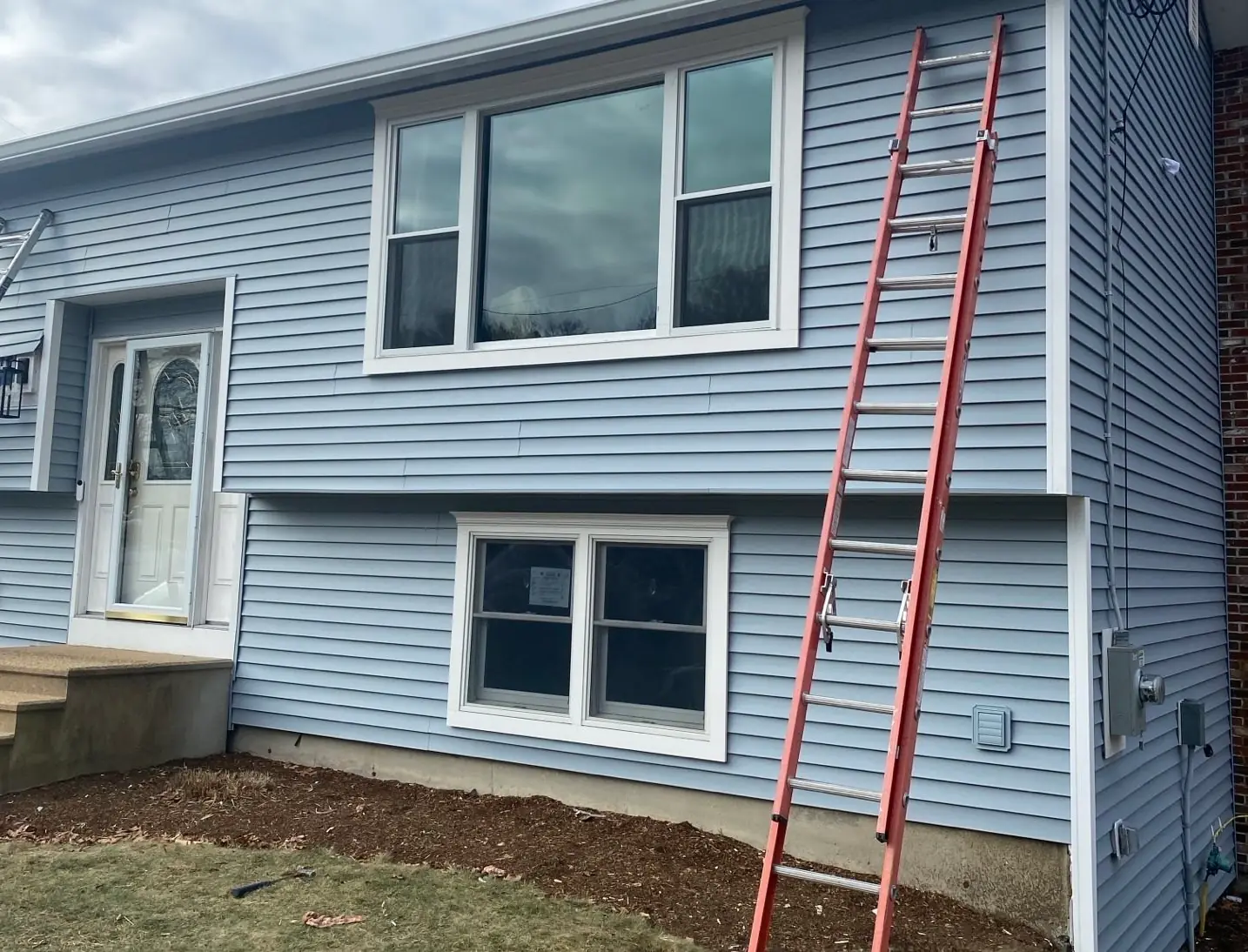
The practical side of this choice
Nailing pattern determines whether panels perform correctly
Vinyl siding has to be face-nailed loosely enough to allow for thermal movement, nailed too tight is the single most common vinyl installation error, and it's what causes visible waviness and buckling within a year or two.
What's behind the vinyl matters as much as the vinyl itself
House-wrap and flashing get checked and corrected during installation, not just covered up, moisture behind vinyl siding can cause real damage long before it's visible from the outside.
Trim details determine the finished look as much as the panels
Vinyl siding's finished appearance around windows, corners, and trim depends on J-channel and accessory trim being cut and fitted correctly, not just the panels themselves, a rushed trim job is often what makes an otherwise good installation look cheap.
Vinyl warranties are typically prorated, not full-replacement
Most vinyl siding manufacturer warranties reduce in coverage value over time rather than covering full replacement cost indefinitely. We walk through what a specific product's warranty actually covers before you commit to it.
Before you decide
With correct installation, vinyl siding commonly lasts several decades, most failures we see are installation-related, incorrect nailing or gapping, rather than the material itself failing.
Some fading occurs with UV exposure over many years, darker colors generally show it more than lighter ones, quality varies by manufacturer and product line.
Sometimes, depending on the condition of what's underneath, we generally recommend a full tear-off so house-wrap and flashing can actually be inspected and corrected, not just covered over.