
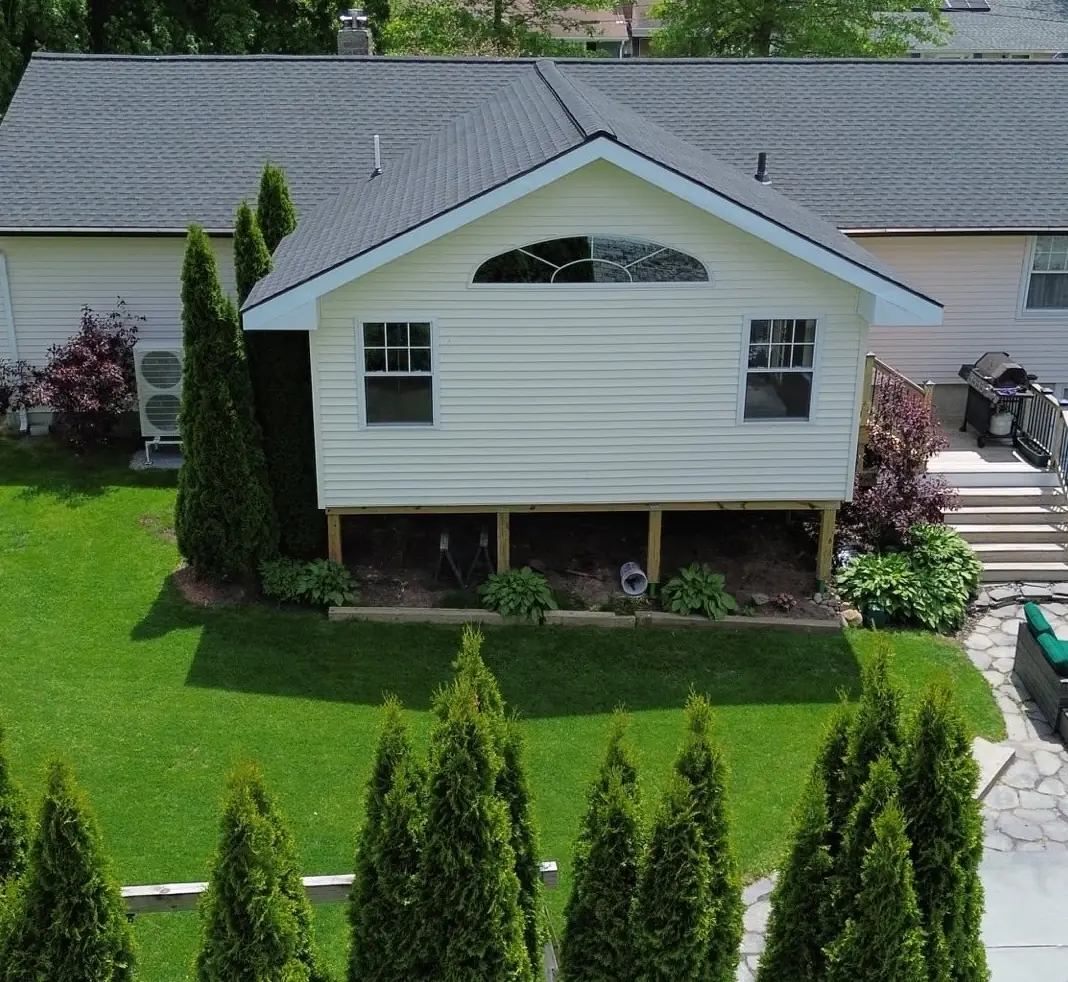
Cedar Siding
Cedar siding gives a natural wood look no manufactured material fully replicates, at the cost of a real, ongoing maintenance schedule that vinyl and fiber cement don't require.
Cedar siding remains the choice for homeowners who want an authentic natural wood exterior, cedar specifically because of its natural resistance to rot and insects compared to other wood species, though it still needs real maintenance that manufactured materials don't.
What does cedar siding actually involve?
That maintenance means periodic staining or sealing to protect the wood and preserve its appearance, skip it and cedar grays and weathers, which some homeowners actually prefer aesthetically, but it's a choice, not a maintenance-free outcome. Installation quality matters as much here as with any material, correct nailing pattern, proper board spacing for expansion, and flashing at every window and door opening determine how well cedar performs through a New England winter.
What you get with cedar siding
Natural wood look, unmatched by synthetics
No composite or fiber cement product fully replicates real cedar's texture and grain, which is exactly why homeowners choose it despite the added maintenance.
Naturally rot and insect resistant, for a wood species
Cedar's natural oils give it better resistance to rot and insects than many other wood species, though still less than vinyl or fiber cement.
Real maintenance, not optional
Staining or sealing on a regular schedule protects the wood and preserves its color, skipping it leads to graying and eventual weathering, a look some homeowners want, others don't.
Repairable board by board
Damaged individual cedar boards are straightforward to replace without redoing an entire wall, provided a reasonably close material match is available.
What actually matters before you decide
Board spacing accounts for real wood movement
Cedar expands and contracts with moisture more than manufactured siding materials, correct board spacing accommodates that movement, installed too tight, cedar siding buckles or cups over time.
Flashing detail matters as much on cedar as any material
Moisture behind cedar siding causes real damage whether or not it's immediately visible on the surface, we check and correct house-wrap and flashing during installation, not just cover it up.
End grain needs sealing that face grain doesn't
A cut end on a cedar board absorbs moisture far faster than the face of the board does, every field-cut end gets sealed before installation, not left raw on the assumption that the finish coat will cover it later.
Cedar's own natural oils affect finish selection
Cedar's natural oils can interfere with some finish products bonding properly in the first year or two after milling. We factor the wood's age and oil content into what finish actually gets recommended, not a one-size stain for every cedar job.
What people ask us
Typically every few years, depending on sun exposure and the specific finish used, we can advise a realistic schedule based on your home's orientation.
Yes, some homeowners prefer the natural gray weathered look and skip staining intentionally, that's a legitimate aesthetic choice, not a shortcut, as long as you're choosing it on purpose.
Generally yes, both in material cost and the ongoing maintenance investment, the tradeoff is a natural material look that manufactured products don't fully replicate.