
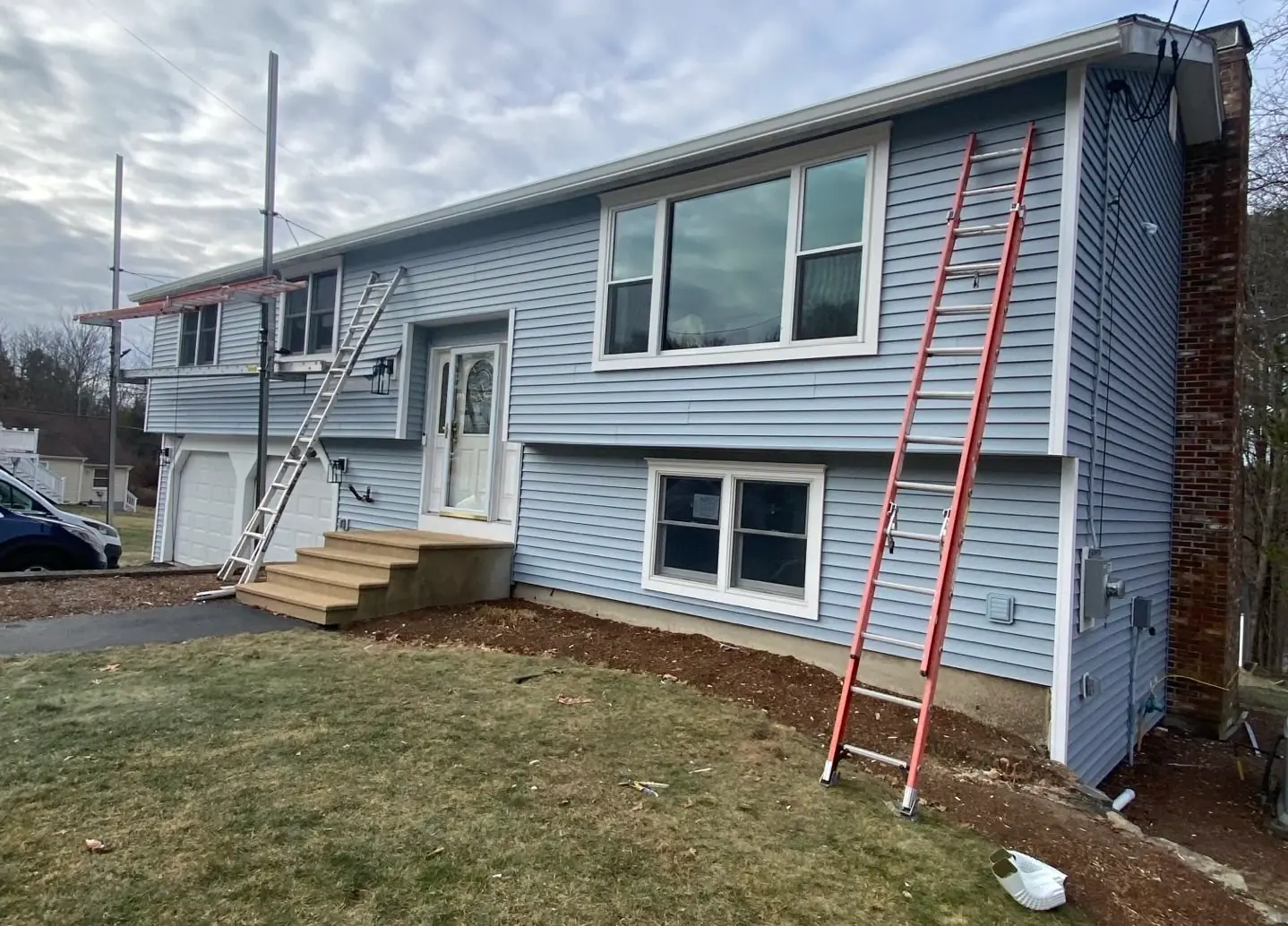
Fascia and Gutters
Fascia and gutters take more weather damage than almost anything else on a home's exterior, and rotted fascia behind an old gutter line is a common find once old siding comes off.
Fascia and gutters sit at the most exposed, water-heavy part of a home's exterior, where roof runoff concentrates, which makes them prone to rot and damage well before the rest of the siding shows its age.
What does fascia & gutters actually involve?
We handle fascia and gutter work both as part of a full re-side, where it's common to discover rotted fascia behind an old gutter line once the original siding comes off, and as a standalone repair when one section is failing ahead of the rest of the exterior. Replacing fascia properly means addressing whatever caused the damage in the first place, usually a gutter that wasn't pitched correctly or was overdue for cleaning, not just installing new material over the same underlying problem.
What you get with fascia & gutters
Often discovered during a re-side
Rotted fascia behind an aging gutter line is one of the most common findings once old siding comes off, addressed then rather than left to fail again in a few years.
Standalone repair when needed
Fascia and gutter issues don't always require a full re-side. We handle it as its own job when that's genuinely all that's needed.
Root cause gets addressed, not just covered
New fascia installed over the same drainage problem that damaged the old fascia just delays the next failure, we address what actually caused the damage.
Proper gutter pitch prevents repeat damage
Gutters have to be pitched correctly to actually drain rather than pool water against the fascia, incorrect pitch is a common reason fascia rots prematurely in the first place.
What actually matters before you decide
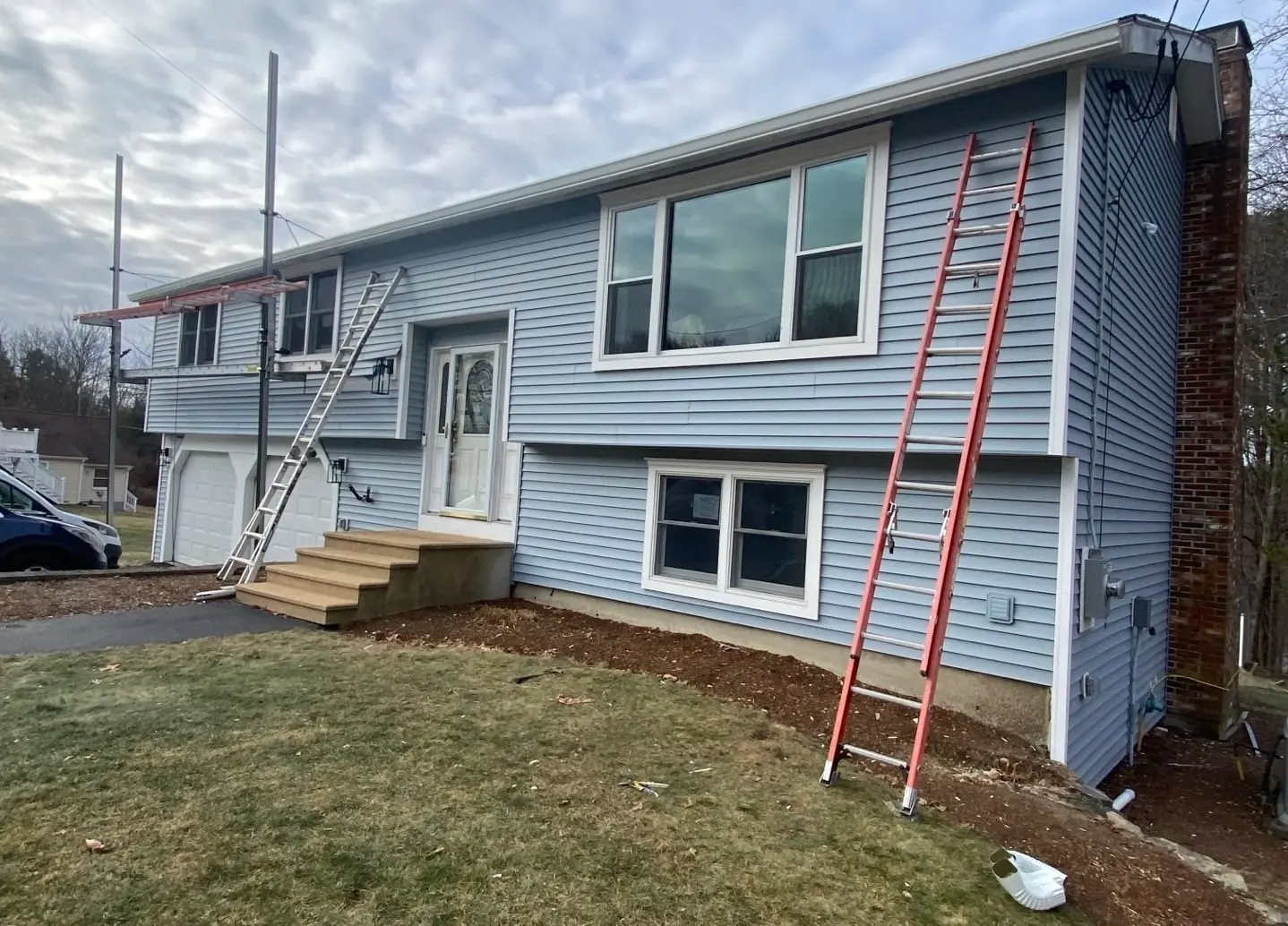
Fascia damage is usually a symptom, not the root problem
Rotted fascia is very often caused by a gutter that's clogged, incorrectly pitched, or pulling away from the house, replacing fascia without correcting the actual drainage issue behind it just delays the same failure.
Fascia and trim profiles vary by home age
Homes built before modern siding standardization often have fascia and trim profiles that don't match off-the-shelf material exactly. We check this before ordering, not after the crew is already on site.
Gutter pitch is a real number, not eyeballed
A gutter needs a consistent slight pitch toward the downspout, roughly a quarter-inch of drop per ten feet, to actually drain instead of holding standing water that accelerates corrosion and ice dam formation in winter.
Ice dam history changes the fascia and gutter detail
Homes with a history of ice damming benefit from gutter and fascia details that account for it, like heat-cable provisions or specific flashing under the drip edge, we flag that history and plan for it rather than install the same standard detail regardless.
What people ask us
Visible sagging, soft or spongy wood, or paint that's peeling in a way that suggests moisture underneath are the common signs. We can assess it as part of any estimate.
Yes, if the fascia underneath is still sound, gutters can be replaced on their own. We check the fascia condition first rather than assuming either way.
Yes, a gutter replacement includes downspouts sized and placed to actually move water away from the foundation, not just off the roof edge.