
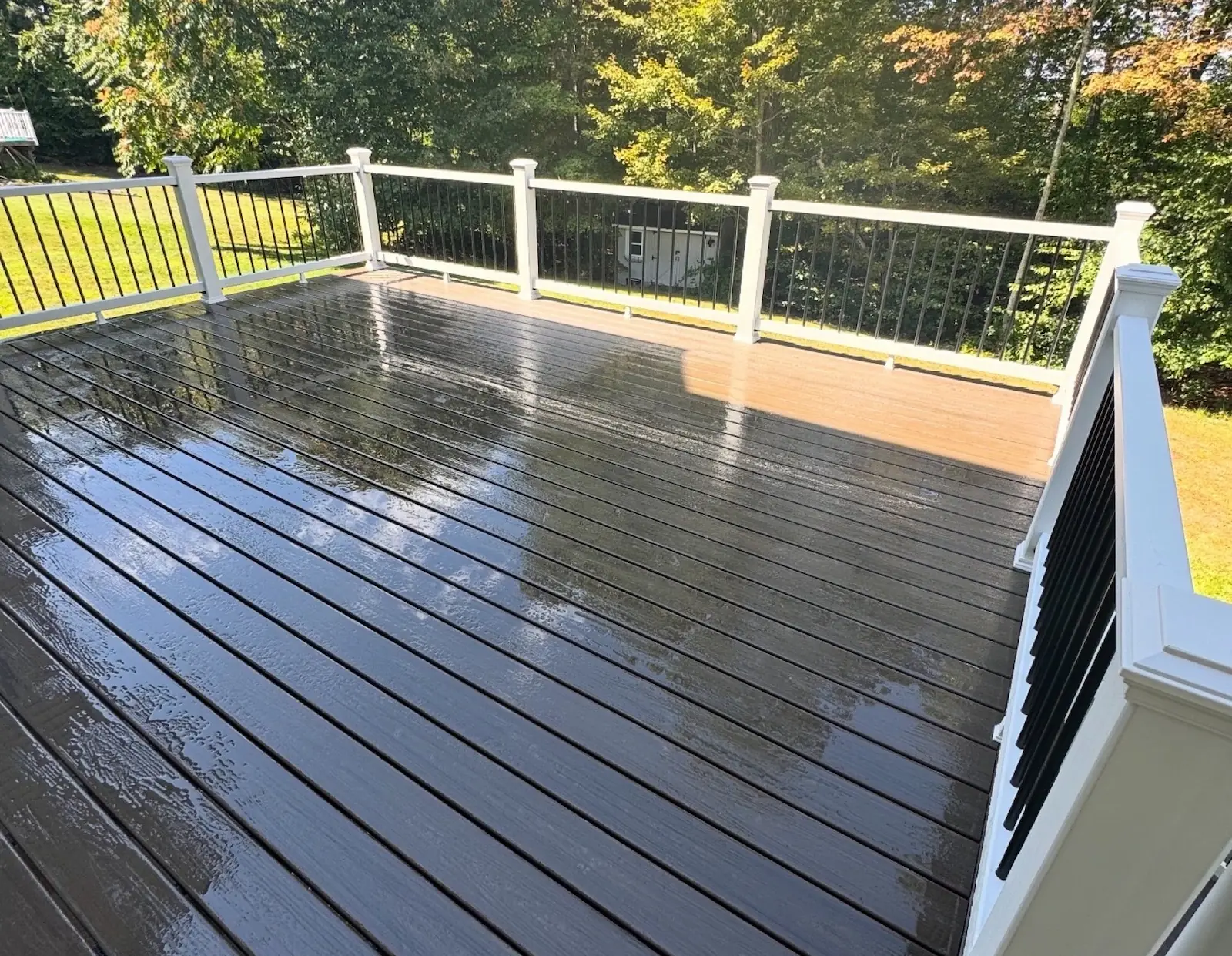
Composite Decking
Composite decking is made from a blend of wood fiber and recycled plastic, built to resist fading, staining, and rot without the yearly maintenance a wood deck needs.
Composite decking has become the default choice for homeowners who want a deck that looks finished every year without restaining or sealing it.
What to expect from composite decking
The material is manufactured from a combination of wood fiber and recycled plastic, which gives it more resistance to moisture, insects, and UV fading than natural wood, at the tradeoff of a higher material cost up front. We install Trex, Fiberon, and Deckorators composite decking, all installed with hidden fastener systems and proper gapping for thermal expansion, since composite boards expand and contract with temperature differently than wood does, and getting that gap wrong is how boards buckle in the first hot summer.
Why composite decking makes sense
Low maintenance, not no maintenance
Composite decking doesn't need staining or sealing, but it does need periodic washing to keep mildew and pollen from building up in the board's texture, especially in shaded, damp yards.
Color and texture options
Composite boards come in a wide range of wood-look colors and grain textures, from traditional wood tones to more contemporary gray and charcoal finishes, without the maintenance a real wood tone requires to stay that way.
Hidden fastener installation
We install with hidden fastener clip systems where the board profile supports it, which gives a clean, screw-free surface and even board spacing that holds up over time.
Manufacturer-backed material
Trex, Fiberon, and Deckorators all back their composite boards with a manufacturer warranty against material defects, installed to their published spec so that warranty actually stays valid.





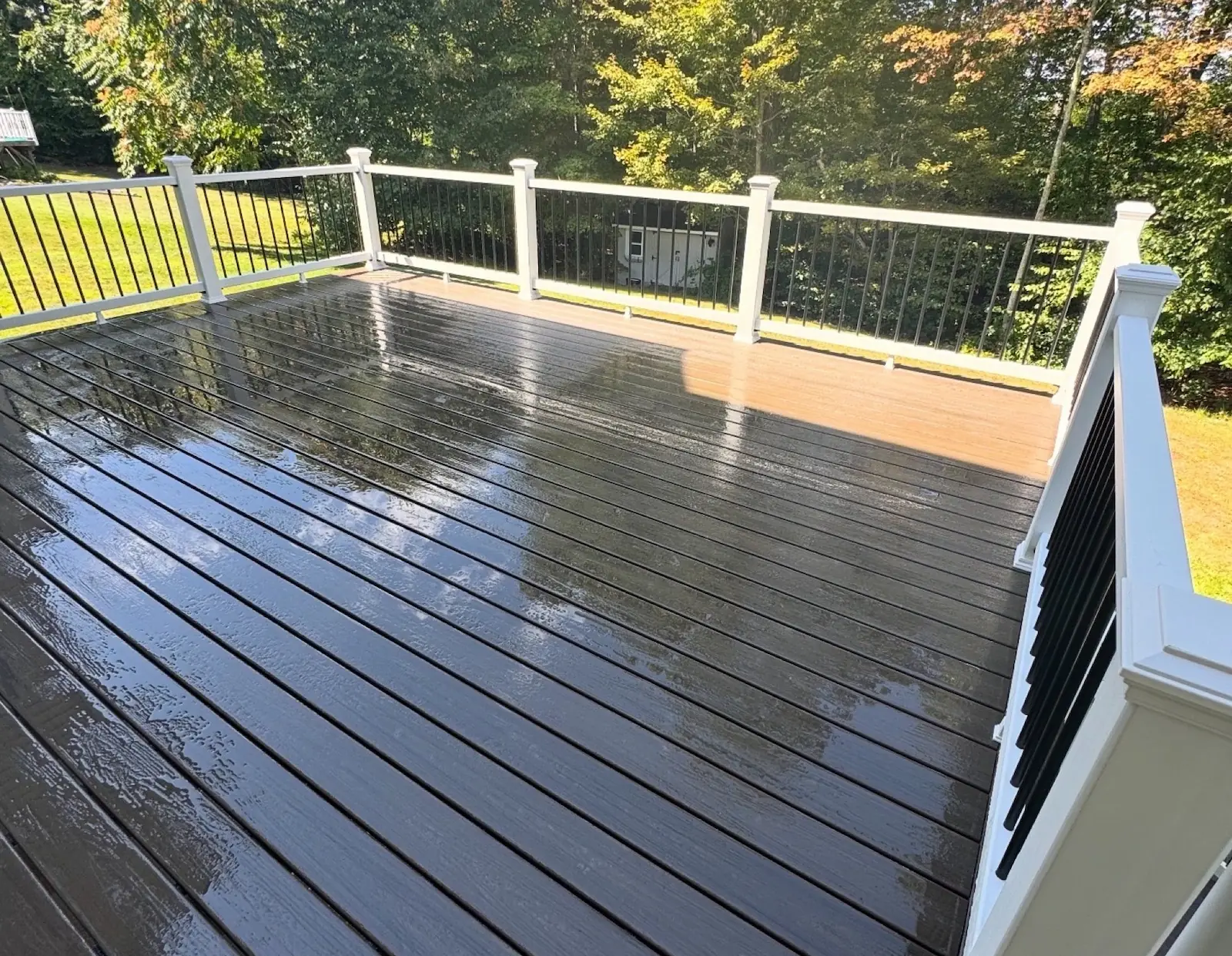
The practical side of this choice
Thermal expansion gapping matters more than it looks like it should
Composite boards expand and contract with temperature more than wood does. Gapping that's too tight is the most common reason composite decking buckles or cups in its first hot summer, we follow manufacturer spec gapping on every board, every run.
Composite framing underneath still needs to meet span tables
Composite decking is heavier than standard wood decking per square foot, which affects joist spacing. We size framing to the actual material weight, not a generic wood-decking span table.
Manufacturer warranties require manufacturer-spec installation
Trex and Fiberon's product warranties are conditioned on installation following their published fastening and gapping guidelines. Deviating from spec to save time on the install can void coverage on a board that fails years later.
Hidden fastener clips aren't interchangeable across brands
Composite decking's hidden fastener clips are sized to that manufacturer's specific board profile. Mixing clip systems between brands is a common source of loose boards that isn't obvious until the deck's been walked on for a season.
Before you decide
Pressure-treated wood costs less up front and needs restaining every two to three years. Composite costs more at install and after that you're mostly just washing it, over 15 years the math usually favors composite.
Yes, darker composite colors absorb more heat than lighter ones, similar to any dark decking surface. Lighter color options reduce this if it's a concern for bare feet.
Trex, Fiberon, and Deckorators, all installed to each manufacturer's published fastening and gapping spec so the material warranty stays intact.