
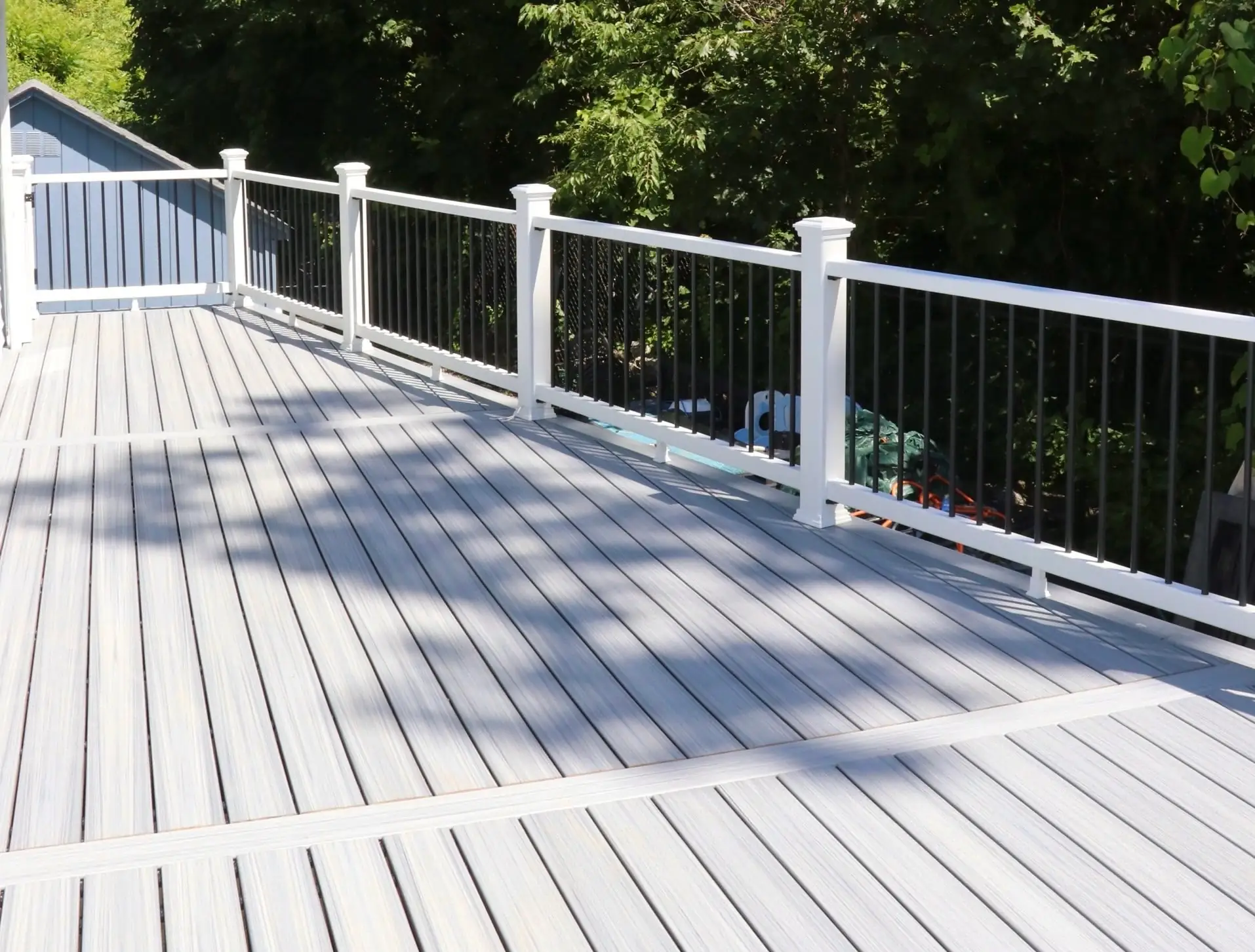
Deck Railing
Deck railing is a code requirement above 30 inches of height, and a real design choice below it. Wood, composite, cable, and aluminum systems all meet code differently.
Deck railing does double duty, it's a safety requirement once a deck reaches a certain height off grade, and it's one of the biggest visual design decisions on the whole project.
How we approach deck railing
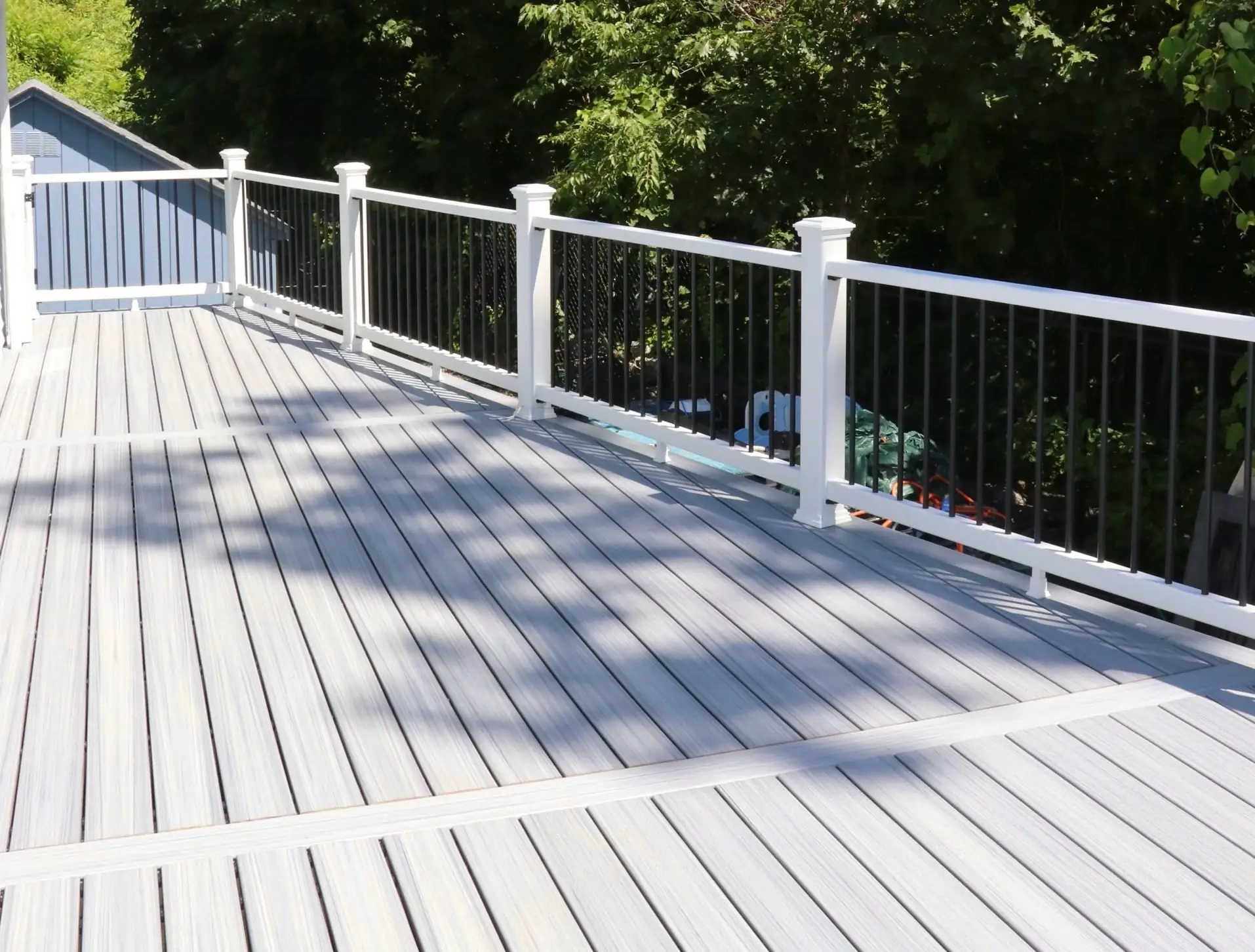
Wood and composite railings give a traditional look and are the most budget-friendly options. Cable railing uses horizontal steel cables instead of balusters for an open, unobstructed sightline, at a higher material and labor cost. Aluminum railing systems split the difference, low maintenance like composite with a more contemporary profile. Whatever the material, baluster spacing, post attachment, and top rail height all have to meet the code that applies in your specific town, which is checked project by project, not assumed from the last job.
What makes deck railing different
Wood and composite, the traditional choice
Matches the decking material or contrasts with it, the most common railing style and generally the lowest cost option.
Cable railing for an open view
Horizontal steel cables replace balusters for a sightline that doesn't block the yard or the view beyond it, popular on elevated or waterfront decks.
Aluminum for low maintenance, modern look
Powder-coated aluminum railing holds up without painting or staining and reads more contemporary than traditional wood balusters.
Code-driven baluster spacing
Baluster gaps have to be tight enough that a 4-inch sphere can't pass through, which affects material quantity and cost regardless of which railing style you choose.





What to know before you commit
Post attachment carries real lateral load
A railing has to resist someone leaning or falling against it, not just support its own weight. We use through-bolted post connections rated for actual lateral load, not surface-mounted brackets that look fine until they're tested.
Guardrails are required above 30 inches in most towns
Once a deck's walking surface is more than 30 inches above grade, a guardrail at 36 inches or higher becomes a code requirement in most Massachusetts and Connecticut towns, we confirm the exact threshold for your address.
Baluster spacing is a hard code number, not a style choice
Guardrail baluster spacing has to be tight enough that a 4-inch sphere can't pass through it in most Massachusetts and Connecticut towns, a fixed safety requirement, not a design preference we can adjust for a homeowner's preferred look.
Cable railing needs periodic tension adjustment
Stainless steel cable railing stretches slightly over time and needs re-tensioning as part of normal maintenance, a system installed and never adjusted again will eventually sag below the spacing it was built to meet.
Questions about deck railing
Aluminum and cable railing generally hold up with the least maintenance, since there's no wood component to stain or seal. Composite railing is a close second.
Yes, composite decking with a cable railing, or wood decking with an aluminum railing, are both common combinations. It comes down to the look you want.
No, railings are typically covered under the same deck permit, not a separate filing, but they do need to meet current code even on a repair or replacement job.