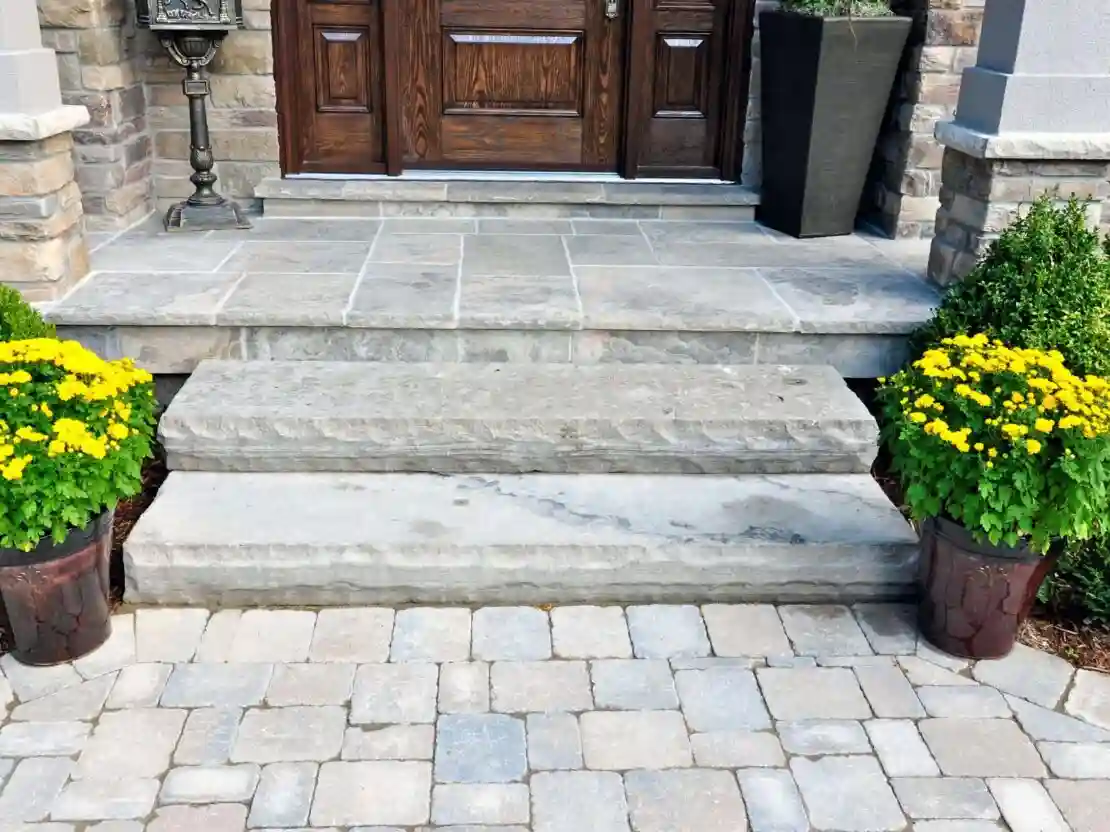
Custom Patio Installation
Paver, natural stone, and concrete patios, all built on the same non-negotiable foundation: a properly compacted base sized to your actual soil, not a one-size approach.
A patio's material, paver, natural stone, or concrete, is the part everyone picks first. The base underneath it is the part that actually determines whether it's still flat five winters from now.
What does custom patio installation actually involve?
Concrete pavers give the widest range of colors, shapes, and price points, and hold up well through a New England freeze-thaw cycle. Natural stone and flagstone cost more but give a genuinely organic, unique look that manufactured units can't fully replicate, since no two pieces are identical. Poured concrete typically costs the least of the three and can be broomed for simple slip resistance, stamped to mimic stone or pavers, or left as exposed aggregate for texture. Whichever material you choose, the same base standard applies underneath it, excavated to the depth your actual soil calls for and compacted in lifts, not all at once, before anything gets set or poured on top.
What you get with custom patio installation
Concrete pavers, the versatile choice
Widest range of colors, shapes, and price points, holds up well through freeze-thaw cycles, and typically the most budget-friendly option.
Natural stone and flagstone
An organic, timeless look at a higher material cost, each piece is genuinely unique rather than uniformly manufactured.
Poured concrete
The lowest material cost of the three, broomed for slip resistance, stamped to mimic stone or pavers, or left exposed-aggregate for texture.
Base prep is the same standard either way
Excavated to the correct depth and compacted in lifts, with a bedding layer or control joints sized to whichever material actually gets chosen.
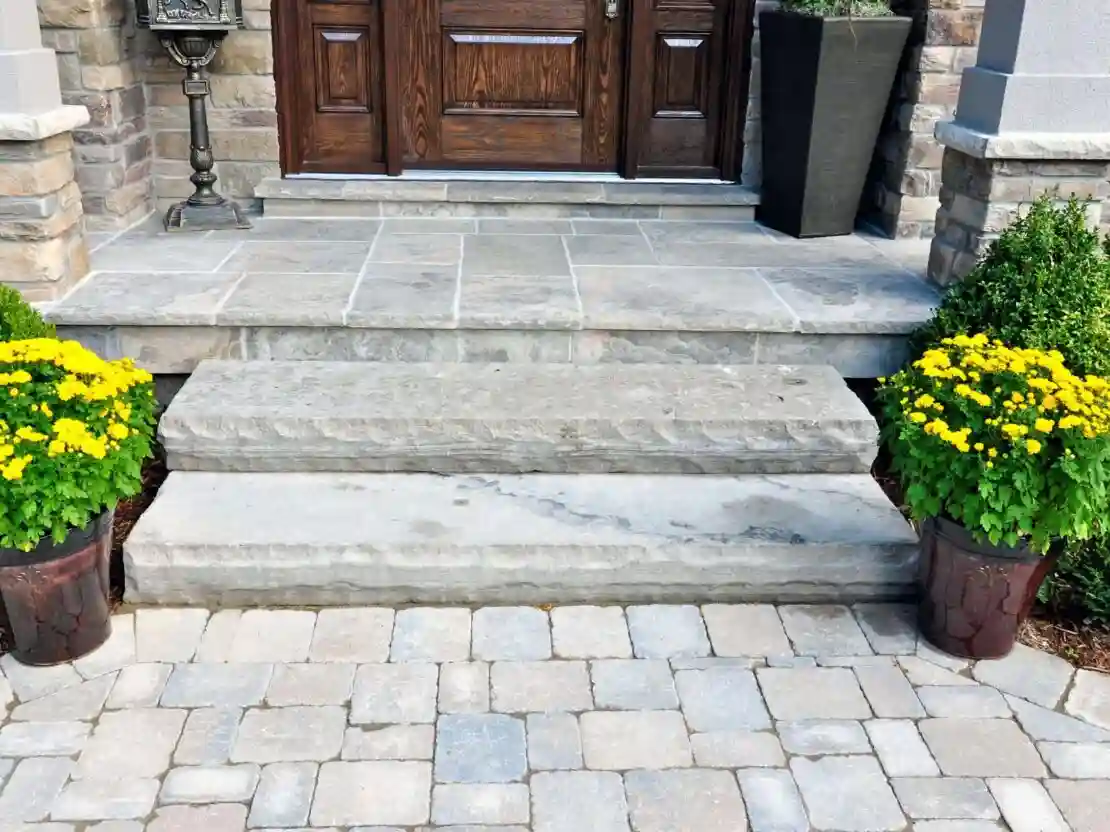
What actually matters before you decide
Base compaction happens in lifts, not all at once
Compacting base material in a single deep pass instead of multiple thinner lifts is one of the most common shortcuts that leads to settling within the first couple of years. We compact in lifts appropriate to the material and depth required.
Natural stone thickness varies within the same batch
Natural stone doesn't come in uniform thickness the way manufactured pavers do, laying it flat and consistent takes real base-leveling work per piece, not a single compacted base depth applied everywhere.
Control joints prevent random cracking, not the other kind
Concrete cracks as it cures and settles, control joints get placed so that cracking happens in a straight, planned line rather than a random one across the visible surface.
Polymeric sand joints need the right cure conditions
Polymeric sand needs to cure without rain or heavy watering for the manufacturer's specified window after installation, rushing this step is a common reason paver joints wash out or crack within the first season.
What people ask us
With proper base prep, a decade or more before any work is needed, regardless of material. Poor base compaction is almost always the reason a patio fails early, not the material on top.
It comes down to budget and look. Concrete pavers are the most budget-friendly and hold up well through freeze-thaw cycles. Natural stone costs more but gives a genuinely unique, organic look. Poured concrete costs the least and can be stamped to mimic either one. We'll walk through the real tradeoffs for your project and budget.
It depends on the material. Sealing can help preserve paver joint sand and stone color, and it isn't optional for concrete in a freeze-thaw climate like ours, we'll advise based on what you choose.